HOST x Studio Perring: A Collaboration in Clay and Sustainable Design
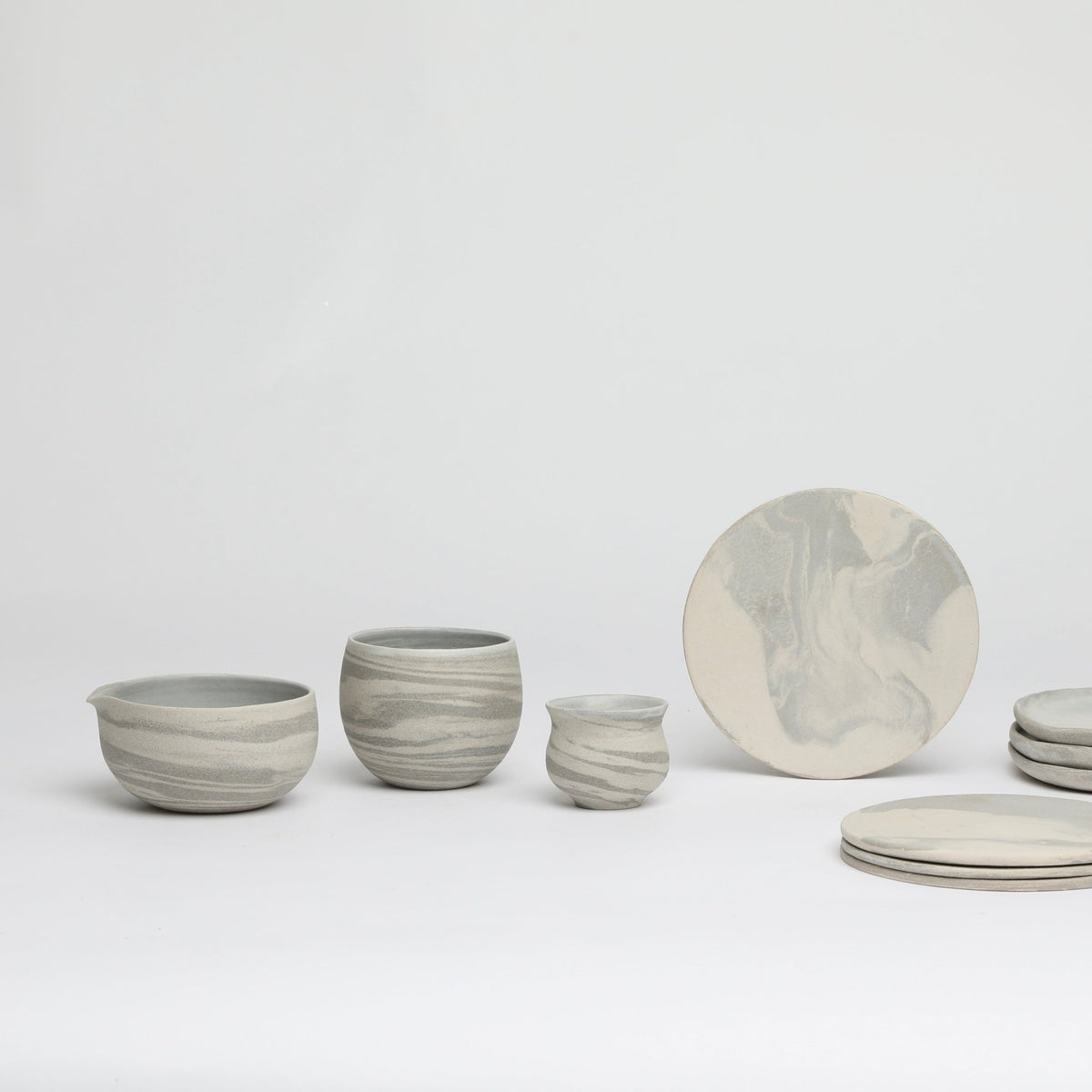
STRATA CERAMIC COLLECTION
Whatever the reason — a desire to try something new, acquire new skills, unwind from daily pressures or pursue professional development — more people are discovering pottery.
Perhaps its appeal lies partly in the serenity of its unhurried processes and the earthy scents that fill ceramic studios. There is something restorative about working with clay, particularly against the relentless pace of modern life.
Ceramic studios are fascinating spaces that blend community and solitude. They are both bustling hubs of creativity and peaceful sanctuaries, where makers explore the possibilities of one of humanity's oldest materials.
Yet amid this creativity, it is easy to overlook some of the industry's less visible realities.
Ceramic production is energy-intensive, particularly during firing, and relies on the extraction and processing of natural resources. While unfired clay can often be reclaimed, fired ceramic waste presents a more difficult challenge.
For this reason, we deeply value the efforts of those who seek to cherish and honour this remarkable material. It is with great pleasure that we introduce STRATA, our collaboration with London-based Studio Perring.

Patiently developed, the collection brings the studio's distinctive contemporary style, rich character and remarkable tactility into a range of sculptural, functional ceramics.
Each piece is handcrafted using blends of recovered studio clays developed exclusively for HOST.
Graham Perring of Studio Perring is a ceramic artist whose work is primarily hand-built. This approach gives him greater control over the distribution of material, from heavily grogged, coarse black clay to lighter, flecked compositions.
These contrasts evoke the interplay between strength and fragility that is so distinctive in his work.
Although more time-consuming, hand-building allows Graham to explore the inherent characteristics of clay. Each constituent element plays a role, producing varied and sometimes unexpected outcomes.
The same material can reveal pronounced textures or glass-smooth surfaces, depending on the techniques used to shape and finish it.
His work explores the dialogue between form and proportion, surface and material.
This enquiry extends into the composition of the clay itself. Graham incorporates crushed ceramic waste from earlier, unsuccessful fired pieces, introducing these fragments into new clay bodies to create distinctive compositions.
Graham draws inspiration from the landscapes of the Suffolk coast, which he has visited throughout his life.
The layered geological strata revealed by coastal erosion speak of fragile beauty and an ecological balance that humanity continues to disrupt. This connection informs his commitment to more considered, circular approaches to making.

The collaboration explores the possibilities of reclaimed clay through four distinctive vessels.
The larger bowls, #24 and #21, combine different stoneware clays to create visual contrast. Their exteriors are finished with rubbed red iron oxide, while the interiors feature a matt black glaze.
The distribution of material, from heavily grogged black clay at the base to lighter flecked clay at the rim, creates variations unique to each piece.
The smaller artworks, #79M and #79S, are hand-built using a 100% recovered stoneware clay body blend containing 12% crushed ceramic waste.
Finished internally with a matt black glaze and left unglazed externally, these pieces embody the raw, tactile quality that has become a signature of Graham's work.

Produced in London E10, STRATA brings together material recovery, traditional ceramic craftsmanship and contemporary sculptural expression.
This exclusive collection is available through HOST, reflecting our shared belief that working with reclaimed resources can create objects of lasting character, quality and value.
With love,
The HOST Team