ReCinder The World’s Lowest Carbon Tableware

It is rather curious that the narrative around ‘decarbonising the plate’ has rarely concerned the plate itself. Instead, it has focused almost entirely on what is served upon it – rethinking and reducing the carbon footprint of food production.
Today, however, we are shifting the focus away from food processes, agro miles and packaging. With a sense of excitement, anticipation and pride, we are changing the narrative to talk about the plate itself. It may be bold to say, but decarbonising the plate has never been more accurate – or more achievable.
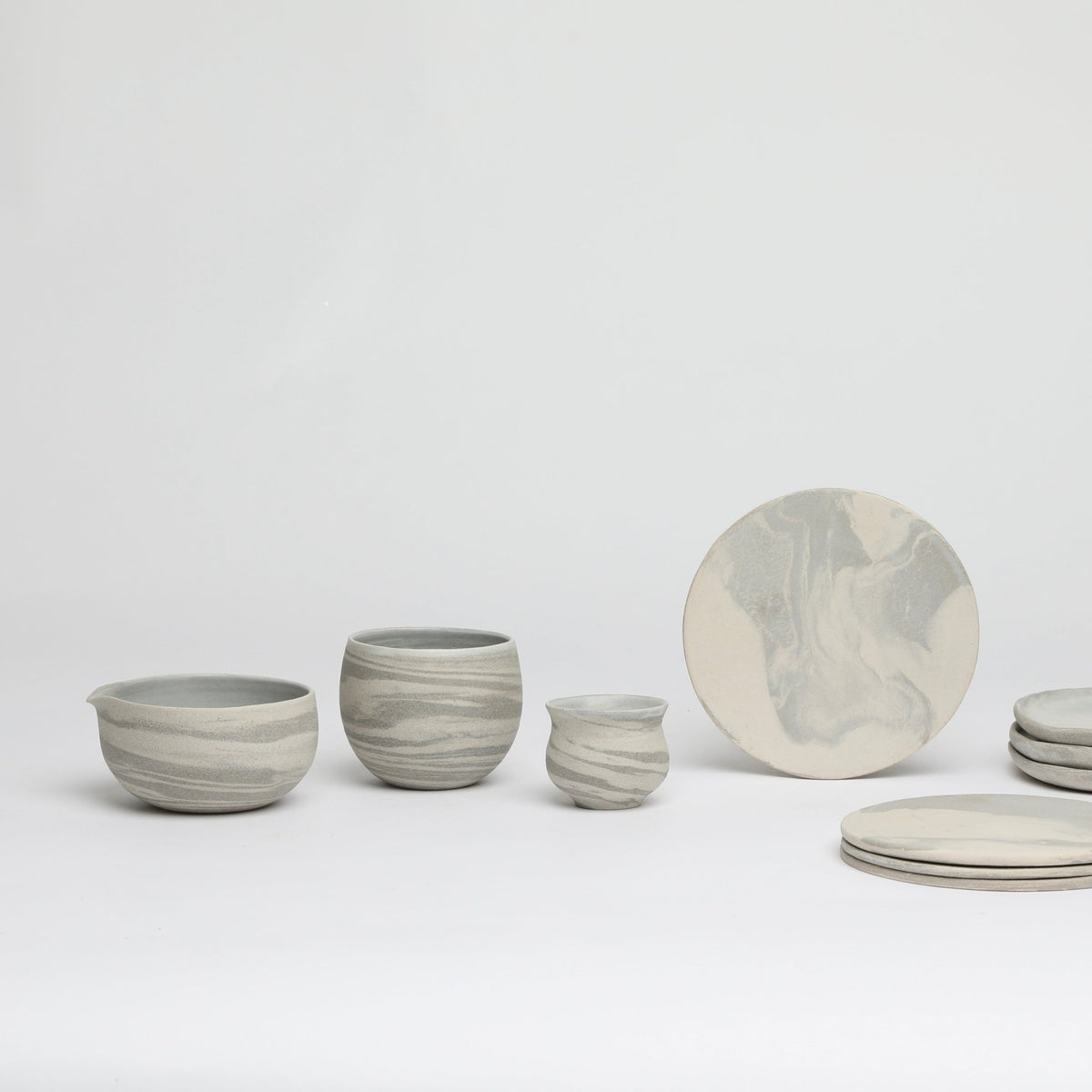
We are thrilled to introduce ReCinder – the world’s lowest-carbon tableware. Created through an exclusive collaboration between Rosy Napper and The Home of Sustainable Things, ReCinder is the result of much belief, persistence and grit. Made from ceramic waste, this ultra-local range is both groundbreaking and a major step forward in sustainable design, transforming a problematic waste material into something beautiful and enduring.
Each ReCinder plate diverts approximately 650 grams of ceramic waste from landfill.
Sourced from local producers and universities across London, broken, defective and unwanted ceramics are transformed into high-quality, durable tableware. ReCinder offers an alternative to conventional ceramic production, reducing reliance on virgin raw materials while giving discarded ceramics a new purpose.
In other words, the more ReCinder tableware is produced using recovered ceramics, the more waste can be diverted from landfill.
The UK ceramics industry generates substantial quantities of waste each year. While unfired clay can often be reclaimed, fired ceramics are much more difficult to reprocess.
Their durability and heat resistance make them challenging to recycle through conventional routes. Disposal can also be costly, leaving a valuable material excluded from the manufacturing cycle.
But ReCinder is more than a response to ceramic waste.
It encourages collaboration and demonstrates how design can contribute to decarbonisation efforts. Above all, it challenges established relationships between materials, production and waste, offering a practical example of circular design in action.
To further reduce reliance on virgin resources, ReCinder incorporates a custom glaze developed using industrial by-products. This approach extends material recovery beyond the ceramic body itself.
The collection is designed for everyday use, combining material innovation with the functionality and durability expected of contemporary tableware.
ReCinder plates are available in two sizes: 21 cm side plates and 26 cm dinner plates. Developed and introduced by HOST, the collection represents an important step in our continuing exploration of circular ceramic production.
Its launch during London Craft Week marked an opportunity to introduce the material innovation to a wider audience and invite discussion about the future of ceramics.
We warmly invite designers, researchers, writers, businesses and the wider public to discover ReCinder and engage with its development.
Meaningful change requires practical solutions, collaboration and a willingness to rethink established ways of making.
The future is circular — and it begins with the materials already around us.
With love,
The HOST Team

ReCinder tableware diverts approx. 650 grams of ceramic waste from landfill
ReCinder transforms reclaimed ceramics into high-quality, low-impact tableware, giving discarded materials a new purpose.
Discover the ReCinder collection, available exclusively online at HOST.